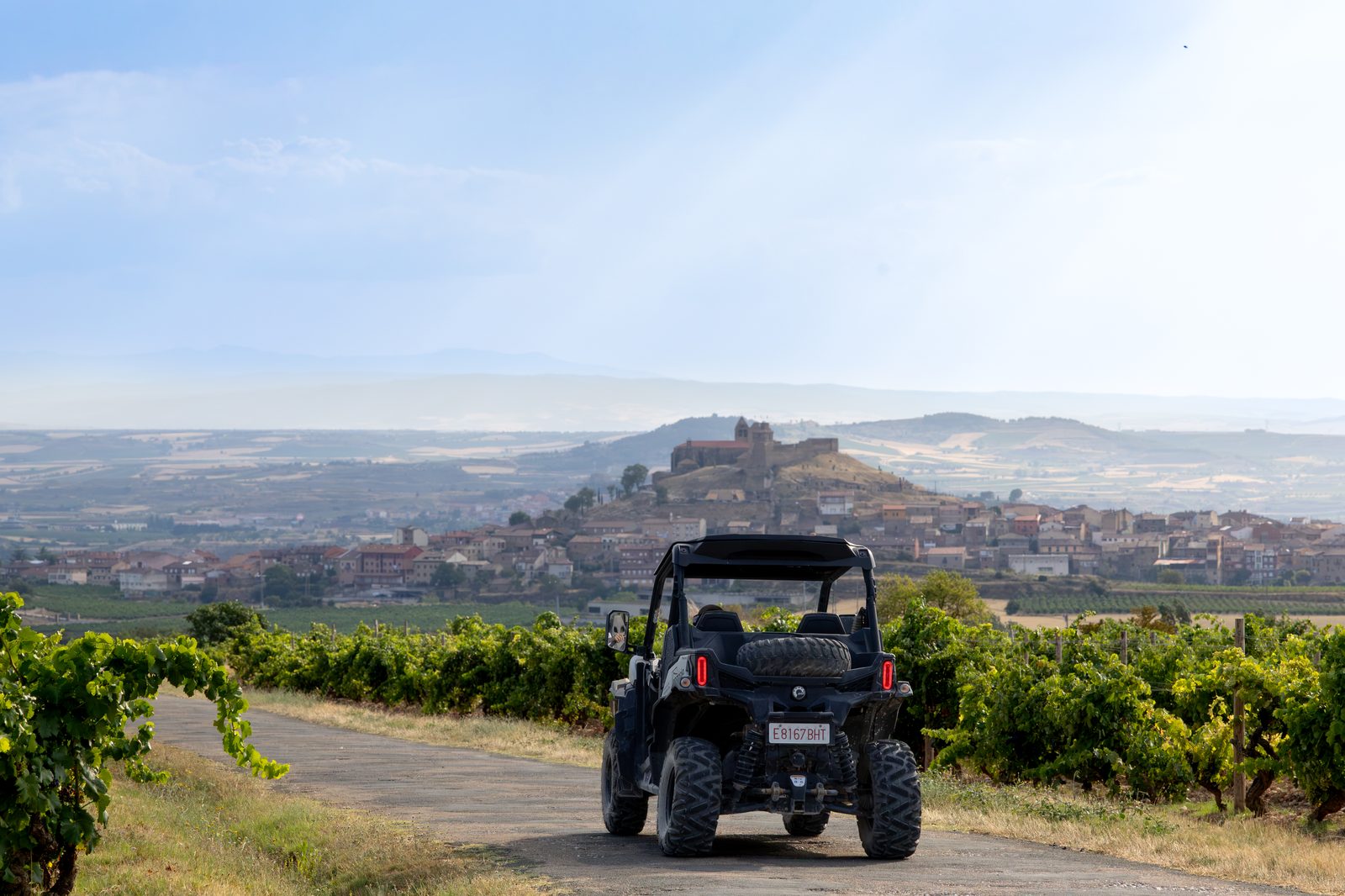
For eleven months of the year Rioja Alavesa is a landscape. Then, for a few weeks between late August and mid-October, it stops being a landscape and turns into an open-air factory: crews bent among the vines from first light, tractors hauling trailers through the villages, weighbridges running flat out, and a sweet, sharp smell — fermenting must — drifting through the streets of Laguardia and Elciego.
If you only get to choose one season, choose this one.
When is the grape harvest in Rioja Alavesa?
There is no fixed date. Picking starts when the fruit reaches ripeness, and that depends on the year, the grape variety and the altitude of each plot.
As a general guide:
| Period | What’s happening |
|---|---|
| Last week of August | First white grapes and the earliest plots. Crews are hired. |
| First half of September | Picking becomes general. Peak activity on the tracks. |
| Second half of September | The bulk of the Tempranillo across most municipalities. |
| Early October | High-altitude plots and old vines — always last. |
| Mid-October onwards | Harvest over. The great autumn colour show begins. |
In 2026 the campaign ran earlier than ever. Summer heatwaves accelerated ripening — the fruit gaining alcohol while losing acidity, which pushed many wineries to bring their picking decisions forward — and harvesting became general around mid-September, some two weeks earlier than the norm of a few years ago, when starting around 10 October was standard.
The DOCa Rioja regulatory board declared the harvest closed on 22 September, with 333.8 million kilos of fruit across the denomination, of which 80.3 million came from Rioja Alavesa (72.1 red varieties, 8.3 white). That is a substantial recovery on the previous two vintages, the shortest in three decades.
If you’re coming specifically for the harvest, check the state of the campaign the week before you travel. One year it runs a fortnight early; the next it runs ten days late.
Why the harvest is especially visible here
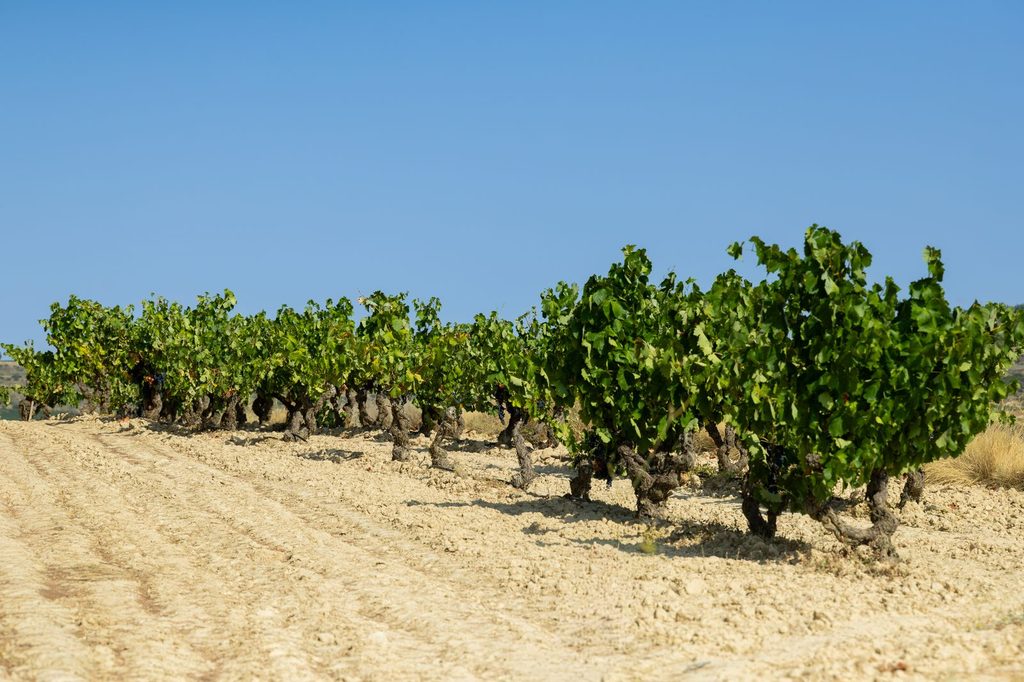
Rioja Alavesa has an unusually fragmented ownership structure: small plots, a great deal of old bush-trained vine, on slopes and clay-limestone soils. That geography dictates how the fruit comes in — to a very high degree, by hand, into small crates so the bunches reach the winery intact.
For a visitor that means something concrete: what you see in the vineyard is people working, not machines. Crews, secateurs, crates, trailers. It’s a human landscape, and that’s why it moves people.
What you’ll actually see
- Crews at dawn. Picking starts very early, while the fruit is cold. By 8 a.m. the vineyard has already been working for two hours.
- Tractor traffic. Farm tracks and back roads fill with loaded trailers.
- Queues at the weighbridge. At wineries and co-operatives you can watch the fruit arrive and be weighed.
- The smell. Nobody warns you about this and it’s what everyone remembers: villages with wineries inside them smell of fermentation for weeks.
- The colour. As October advances, Tempranillo leaves turn red, ochre and gold. The mosaic of plots, each at a different stage, is the most spectacular sight of the year here.
The Rioja Alavesa Harvest Festival
The region’s big popular celebration. It falls on the second Sunday of September and it’s itinerant: a different Rioja Alavesa village hosts each year, so it rotates around the region.
The usual programme: traditional grape treading, a showcase of local wineries with tastings, a parade of floats, folk dance groups, local food and visits to underground cellars. Most of it is free.
Check the current year’s host village through the official Rioja Alavesa tourism channels before you go — it changes every edition, and accommodation in the host village disappears fast.
How to experience the harvest from inside the vineyard
The catch with harvest is that it happens off the road. From the tarmac you see trailers; the work, the crews and the plots are at the end of dirt tracks you can’t drive into — and shouldn’t, since in those weeks they’re working roads with agricultural machinery on them.
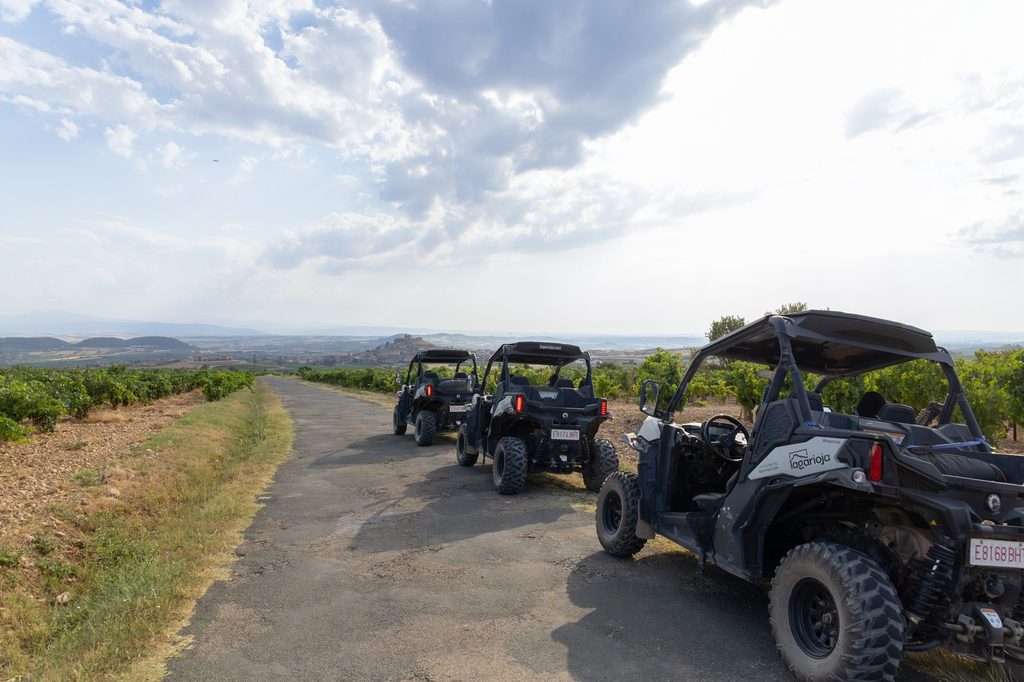
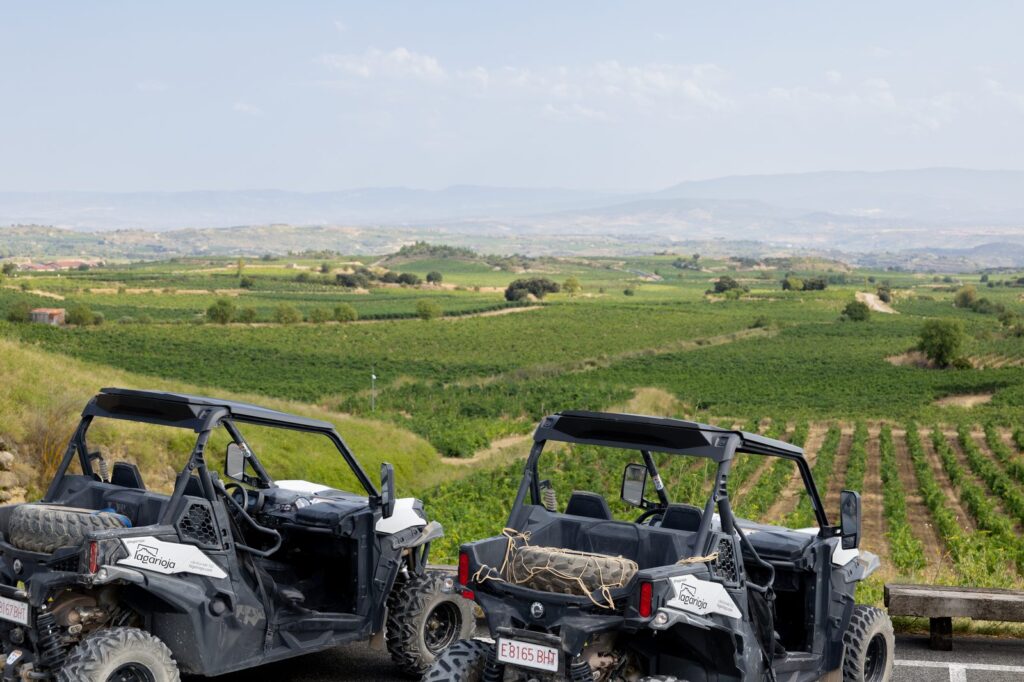
Which is why the best way to see it is with someone who knows the ground. Our buggy tours run precisely on that network of tracks between the plots: slowly, in convoy, with a guide, giving way to the crews, stopping where the harvest landscape reads whole — the Elciego viewpoint, the Alto de la Huesera dolmen, Ysios at the foot of the sierra, and on the longer route the Balcón de la Rioja at around 1,000 metres, where you can see the entire region working at once.
At the end of the ride we sit down to taste DOCa Rioja wine with cheese, cured meat and artisan bread — from wineries you have just driven past. In September, with the fruit going into those same wineries, that last stop is a different thing altogether.
Practical advice for visiting during harvest
- Book accommodation and wineries weeks ahead. September and October are the region’s real high season, well above summer.
- Don’t walk into the vineyards or pick grapes. Every vine has an owner and is accounted for. Photograph from the track; don’t step in.
- Drive carefully. Slow tractors and trailers on blind bends are the norm.
- Start early. Morning light and the crews at work coincide first thing.
- Bring a warm layer. September mornings are cool even when it hits 28°C at midday.
- If you’re after the colour, come in October. The fruit is gone, but the leaves are at their best and there are fewer people.
Frequently asked questions
Can visitors take part in the harvest? Some wineries run visitor harvest days, with very limited places and always by reservation. It isn’t something you can improvise on arrival.
Which is the best week to come? For the work, the second half of September. For the colour, the first half of October.
Is everything open during harvest? Yes, but this is the wineries’ busiest period and some reduce or alter their tours. Always confirm before travelling.
Can I do a buggy tour during the harvest? Yes. We adapt the route day by day to the activity in the vineyards, give way to farm machinery, and stay out of plots being worked.
What about travelling with children? It’s an excellent time: the countryside is in motion and there’s a lot to look at. Children ride as passengers on our tours from age 4.
Come and see it while it’s happening
The harvest lasts a few weeks and doesn’t wait. It’s the only time of year you can watch this landscape in full operation.
👉 Book your buggy tour through Rioja Alavesa — departures from Laguardia, our own guides, and a local produce tasting to finish.
Planning the rest of your trip? Here’s our guide to things to do in Rioja Alavesa, eight wine experiences beyond the winery visit, what a buggy tour here is actually like and what makes Rioja Alavesa and Rioja Alta different.
Ride The Land.